Punjab Politics: From Catch-All Strategy to Solely Electoral Calculations – By Amitoj Singh
Punjab Politics: From Catch-All Strategy to Solely Electoral Calculations – By Amitoj Singh
PRESENT SCENARIO OF PUNJAB POLITICS
A popular phrase from the Catch-All Party can now be aptly applied to the politics of Punjab, which has been reduced to mere electoral politics, where the only aim is to secure maximum electoral gain. With approximately 17 months left for the Punjab Assembly Elections 2025, political parties in Punjab have started preparing their base for the electoral contest, and the current scenario was reflected in the recently held by-elections. Out of the last five by-elections, AAP won 4 seats while Congress secured 1, with others failing to make any mark. The Aam Aadmi Party in Punjab emerged as an alternative to the traditional duopoly of the SAD-BJP alliance and the INC, driven by the desperation of the people of Punjab for alternative politics.
BJP: Despite not winning any seat in the 2024 parliamentary elections or in the Punjab by-elections, one consistent trend has been their gradual increase in vote share. Securing more votes than the SAD indicates the BJP’s entry into Punjab’s rural vote bank, traditionally a stronghold of the SAD. They are attempting to shift Punjab’s political discourse towards the Central Government schemes. The BJP state unit has launched rural campaigns with the slogan “BJP de Sewadar Aa Gaye Ne Tuhade Dwaar.” Recently, in Punjab University Student Elections, ABVP — their student wing — won the presidential seat for the first time, reflecting a shift in youth sentiment in the region. However, the BJP still faces mistrust in Punjab due to the farm laws and the agitation that claimed many farmers’ lives.
Indian National Congress: Though organizationally strong, the Congress is plagued by open intra-party conflicts and factionalism, which contributed to its defeat in the 2022 Assembly elections and again surfaced in the recent Ludhiana by-election. If party leaders manage to align on common ideas and agendas, they could improve their vote share, but as of now, internal divisions make this challenging.
Aam Aadmi Party: AAP secured a landslide victory in 2022 with 92 seats, emerging as a fresh alternative. However, their image of “alternative politics” has since declined, evident in the Lok Sabha elections where they managed only 3 out of 13 seats and even lost ground in Delhi to the BJP — a major setback to their “Delhi model.” Punjab is now their last stronghold to revive ambitions of being a national alternative. Despite setbacks, AAP still has 17 months left in its tenure. If they fulfil poll promises — such as free 300 units of electricity per household — and strengthen health and education reforms, they could still retain power in 2027.
SAD: Once a Panthic party, then a dominant regional force, SAD is now in decline. The party has split into two factions — one led by Sukhbir Badal and the other by Giani Harpreet Singh. Infighting over the party symbol and leadership has weakened them further. A major cause of their downfall remains the sacrilege incidents, which hurt Sikh sentiments. Recently, Sukhbir Singh Badal was declared Tankhaiya by the Panj Singh Sahibs at Shri Akal Takht Sahib for mistakes committed during SAD’s tenure (2007–2017). A rebel group has also arisen, intensifying factionalism.
SAD (Waris Punjab De) and SAD (Amritsar): These groups have attempted to fill the political vacuum with Panthic politics, focusing on Sikh institutions, Sikh detainees, and drug issues. However, they lack significant electoral success or a mass base.
Other Political Factors:
- Caste: Dalit politics surged in 2022. The postponement of the Punjab elections for Guru Ravidass Jayanti reinforced the influence of the SC community (32% of Punjab’s population). Congress projected Dalit leader Charanjit Singh Channi as CM, AAP had Dalit leader Harpal Singh Cheema as Leader of Opposition, and SAD promised a Dalit Deputy CM.
- Religion: Faith continues to shape politics. The AAP government introduced the Punjab Prevention of Offences Against Holy Scriptures Bill, 2025, prescribing punishment for sacrilege across all faiths. Meanwhile, SAD’s decline is still linked to sacrilege incidents during its tenure. To counter the BJP’s gradual rise in Hindu votes, AAP is now focusing on urban Hindu centres with promises like a Hindu Temple Act.
- Panthic Politics: SAD is attempting to revive its Panthic image. The 2024 Lok Sabha elections saw two independent Panthic candidates — Amritpal Singh (Khadoor Sahib) and Sarabjit Singh Khalsa (Faridkot) — win, reflecting the Panth’s continuing relevance.
- Deras: Political leaders continue to visit Deras to secure the support of their large followings.
Economic Concerns and Populism:
The electoral space in Punjab is wide open, with four main political players and smaller regional outfits. Yet, a vacuum persists — that of ideology and issue-based politics. Populist measures dominate, with parties announcing freebies rather than addressing Punjab’s deep-rooted crises. Key issues such as fiscal deficit, groundwater depletion, drug mafia, and law and order remain neglected.
Punjab is now on the verge of becoming the most debt-ridden state in India. Debt has risen from ₹1,28,836 crore in 2015–16 to ₹3,82,935 crore in 2024–25 (47.30% of GSDP), projected to reach ₹4,17,136 crore by 2025–26. Even during the recent floods, political blame games overshadowed collective action to support victims.
Conclusion:
The need of the hour is to bring debates and discussions back to Punjab’s real issues. Structural reforms, rather than populist electoral measures, are essential for the state’s survival and progress.
Disclaimer: The views expressed in this write-up are based on analysis of current political trends and available information. They do not necessarily represent the views or positions of any individual, organisation, or political party.
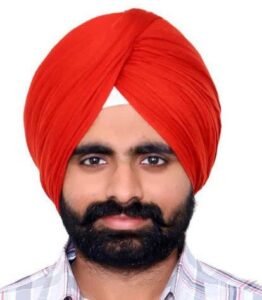
Mr. Amitoj Singh
(MA Political Science from Panjab University, Chandigarh & UGC NET qualified) is apolitical. Views expressed are personal.
M- 9779454797
email id: amitoj01fzr@gmail.com